By Global Consultants Review Team ,

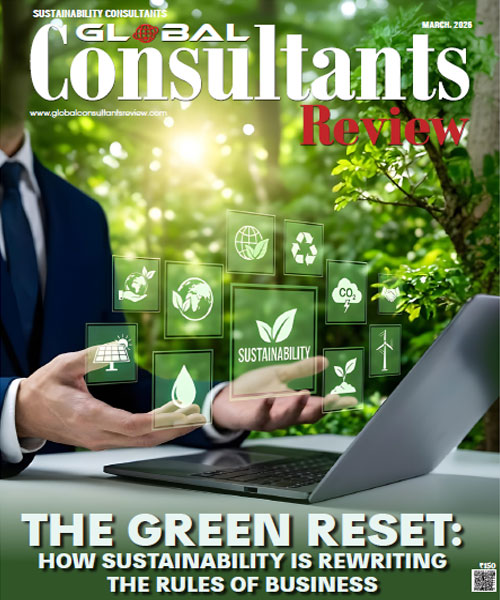
Organizations face increasing pressure from investors, regulators, customers, and stakeholders; sustainability consultants are emerging as key strategic partners in helping businesses navigate environmental and social challenges. Across industries, companies are seeking expert guidance not only to meet sustainability commitments but also to improve operational efficiency, strengthen resilience, and unlock long-term value.
The role of sustainability consultants has evolved significantly over the past few years. What was once largely focused on environmental reporting and corporate social responsibility initiatives has expanded into a comprehensive business function that touches every aspect of an organization. Today, consultants are helping companies develop decarbonization roadmaps, assess climate risks, optimize supply chains, improve resource efficiency, and comply with increasingly complex sustainability regulations.
A growing number of businesses are prioritizing measurable outcomes over broad sustainability pledges. As a result, consultants are being tasked with delivering practical solutions that can demonstrate tangible environmental and financial benefits. This shift reflects a broader market trend where sustainability is no longer viewed as a standalone initiative but as a core component of corporate strategy.
One area experiencing significant growth is climate risk management. Companies are becoming more aware of how extreme weather events, resource shortages, and changing environmental conditions can impact operations and profitability. Sustainability consultants are helping organizations identify vulnerabilities, conduct scenario analyses, and develop adaptation strategies that strengthen business continuity.
At the same time, regulatory requirements continue to expand across global markets. New reporting standards and disclosure frameworks are encouraging businesses to improve transparency around their environmental performance. Consultants are playing a critical role in helping organizations gather reliable data, establish governance structures, and implement reporting processes that meet stakeholder expectations.
Technology is also reshaping the sustainability consulting landscape. Advanced analytics, artificial intelligence, and digital monitoring tools are enabling consultants to provide deeper insights into emissions, energy usage, waste management, and supply-chain performance. These technologies allow businesses to track progress more effectively and make informed decisions based on real-time data.
The manufacturing sector, in particular, is increasingly investing in sustainability consulting services. Companies are exploring ways to reduce energy consumption, transition to renewable energy sources, minimize waste, and improve circular economy practices. Similar trends are being observed across the retail, logistics, technology, and financial services sectors, where sustainability considerations are becoming integral to strategic planning.
Industry experts believe that organizations that successfully integrate sustainability into their operations will be better positioned to manage risks and capitalize on emerging opportunities.
"Sustainability is no longer just about compliance or reputation; it has become a critical driver of business resilience, innovation, and long-term competitiveness," said a Senior Sustainability advisor at a leading consulting firm.
Another notable trend is the growing focus on supply-chain sustainability. Businesses are increasingly examining the environmental and social impacts of their suppliers and partners. Sustainability consultants are helping organizations improve supplier engagement, enhance transparency, and build more resilient procurement strategies.
As market expectations continue to evolve, consultants are also advising companies on sustainable product development and responsible business practices. Consumers are showing greater interest in products and services that align with environmental values, prompting organizations to rethink design, sourcing, and production processes.
Looking ahead, industry analysts expect demand for sustainability consulting services to remain strong. Companies are recognizing that sustainability initiatives can contribute to cost savings, operational efficiency, risk reduction, and enhanced brand value. This growing awareness is positioning sustainability consultants at the center of business transformation efforts worldwide.
With environmental challenges becoming increasingly complex and stakeholder expectations continuing to rise, sustainability consultants are expected to play an even more influential role in helping organizations achieve both commercial success and positive environmental impact.
We use cookies to ensure you get the best experience on our website. Read more...